

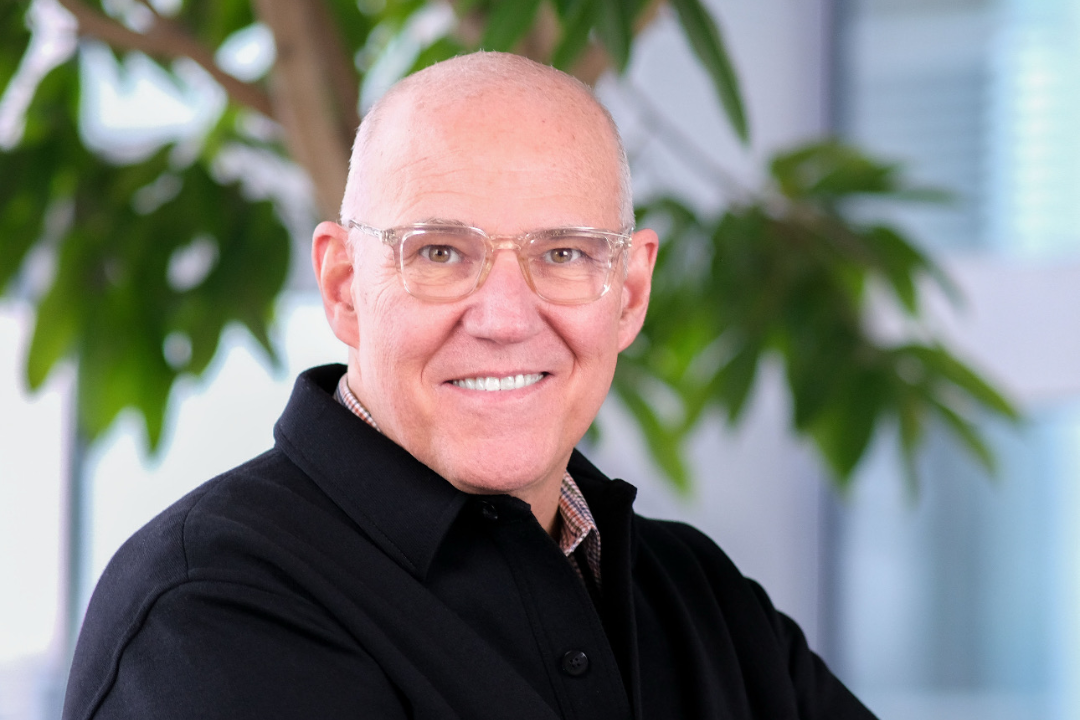
FSU Law alumnus Craig Glidden (’83) has built a career at the forefront of technological change—demonstrating how a strong legal education, paired with fluency in emerging technologies, can shape the future of entire industries.
By: Raghad Hamad
When Craig Glidden graduated from Florida State University College of Law in 1983, artificial intelligence belonged in science fiction. Over the course of four decades, he found himself at the forefront of it, helping shape how industries, regulators, and lawyers navigate a rapidly evolving technological landscape through some of the most complex challenges in modern corporate law.
From the energy sector to autonomous vehicles, Glidden’s career reflects the power of legal education to adapt, evolve, and lead through transformation.
"I chose FSU because it was in the state capital," he said. "That allowed me to blend education with hands-on experience through internships with judges and agencies."
Glidden credits the College of Law for instilling in him both analytical precision and a real-world perspective, and professors such as William VanDercreek, Charles Erhardt, and John F. Yetter for giving him analytical precision and practical grounding.
After beginning his career in Tampa, he launched a commercial litigation practice in Houston focused on Texas’s energy industry.
In 2000, a longtime client offered him a new challenge — to become General Counsel at Chevron Phillips Chemical, a newly formed joint venture between Chevron and Phillips Petroleum.
"After about a year, it became clear I needed to do one or the other full-time," Glidden recalled. "I decided to take the general counsel job, and it changed everything."
That decision marked the start of a distinguished corporate career that later included leadership roles at LyondellBasell Industries and General Motors (GM).
When Glidden joined GM in 2015, the company was emerging from bankruptcy and facing intense scrutiny over product liability issues. Over the next decade, his portfolio grew to include public policy, cybersecurity, and strategic transactions — all increasingly influenced by artificial intelligence.
His involvement in GM’s acquisition of Cruise Automation, an autonomous vehicle company, offered a glimpse of how AI was reshaping law, policy, and ethics.
"It gave me a front-row seat to how AI was developing and how regulatory and ethical questions were unfolding around it," he said.
After becoming president of Cruise from 2023 to 2025, Glidden guided the company through a period of transition before turning his focus to advising AI and technology startups in Silicon Valley. Having witnessed the rise of AI firsthand, he believes the legal profession must evolve just as quickly.
"There’s a lack of clarity in how AI and autonomous vehicles are regulated," he said. "Different jurisdictions are taking different approaches—the EU is highly prescriptive, while the U.S. has taken a more deregulatory stance."
Glidden sees lawyers as central to the responsible growth of AI-driven industries.
"Lawyers need to be embedded with engineering teams," Glidden emphasized. "It’s not about slowing innovation but guiding it responsibly with governance, oversight, and security built in from the start."
He also emphasizes that data minimization and transparent consent mechanisms should anchor every company’s AI strategy.
"Using less data reduces both costs and legal risk," Glidden noted. "Lawyers can design frameworks—AI policies, data governance, and regulatory monitoring—that make this possible."
Glidden predicts that AI will transform not only industries but also the practice of law itself.
"We’re already seeing specialization around AI—privacy lawyers, data scientists, and technologists working together on legal teams," he said. "Lawyers must be AI-literate. Even if you’re skeptical, you can’t afford not to use it. AI won’t replace critical thinking—it will amplify it."
Now advising startups and mentoring young attorneys, Glidden is proud to see FSU College of Law integrating technology into its curriculum through courses and centers that address the intersection of law and business.
"FSU is preparing students for the future," he said. "If we do this right, the opportunities are enormous. I’d love to see FSU continue leading at the intersection of law and technology."
He offers this advice to current law students entering the profession during a time of unprecedented change:
"Use AI where appropriate, but don’t shortchange yourself on the hard work that builds critical thinking. This is a golden opportunity, not something to be feared. We’re at the beginning of a revolution greater than the Industrial Revolution—and lawyers have a front-row seat."