
FSU Law Professor Henry Wang Selected for Federal Research Project on Agency Adjudication
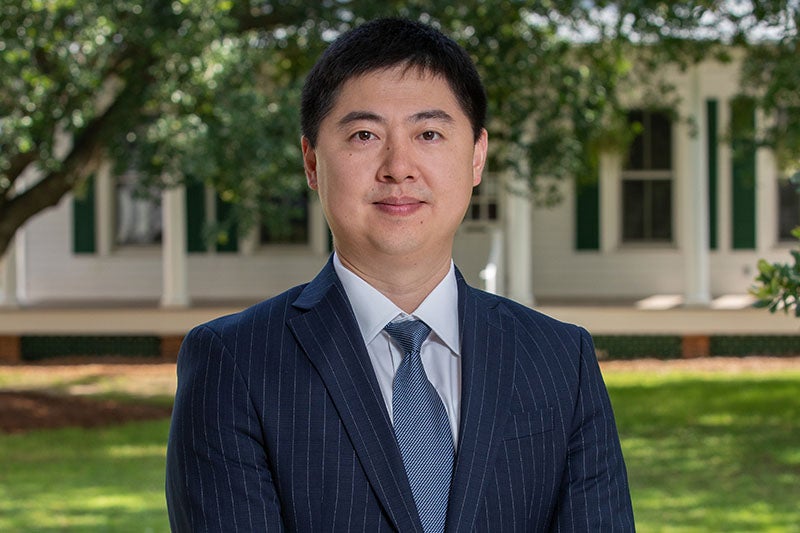
Florida State University College of Law Professor Henry Zhuhao Wang has been selected by the Administrative Conference of the United States (ACUS) to lead a research project examining discovery practices in federal agency adjudication.
The project, “Discovery in Agency Adjudication,” will study how federal agencies regulate and manage discovery in administrative proceedings and develop recommendations for practices that promote fairness, efficiency, accuracy, and timeliness. Wang will receive $25,000 to conduct the research.ACUS is an independent, nonpartisan federal agency charged with identifying and promoting improvements in federal administrative procedures. Its research projects often provide the foundation for recommendations considered by ACUS and, ultimately, for reforms to federal agency practices.
Wang’s project will examine a wide range of discovery mechanisms and practices across federal agencies, including depositions, interrogatories, requests for production and admission, subpoenas, and protective orders. The study will also consider how adjudicators manage discovery, how technology can make discovery more efficient, and how agencies can tailor discovery procedures to the different types of adjudications they conduct. As part of the project, Wang will also undertake a comparative study of discovery and related procedural practices in other common-law jurisdictions, including the United Kingdom, Canada, and Singapore, to identify approaches that may offer useful insights for the federal administrative adjudication system.
The project revisits an issue that has been part of ACUS’s work for more than half a century. In 1970, ACUS adopted Recommendation 70-4, “Discovery in Agency Adjudication,” which established minimum standards for discovery in certain federal administrative proceedings. Wang’s research will examine contemporary agency practices and consider how discovery procedures should operate in today’s administrative system.
“Discovery plays an important but sometimes underexamined role in administrative adjudication,” Wang said. “Federal agencies conduct an extraordinary variety of proceedings, so there is unlikely to be a single discovery model that works equally well everywhere. I am grateful to ACUS for the opportunity to study these practices across agencies and to consider how discovery can be designed and managed to promote both fairness and efficient decision-making.”