
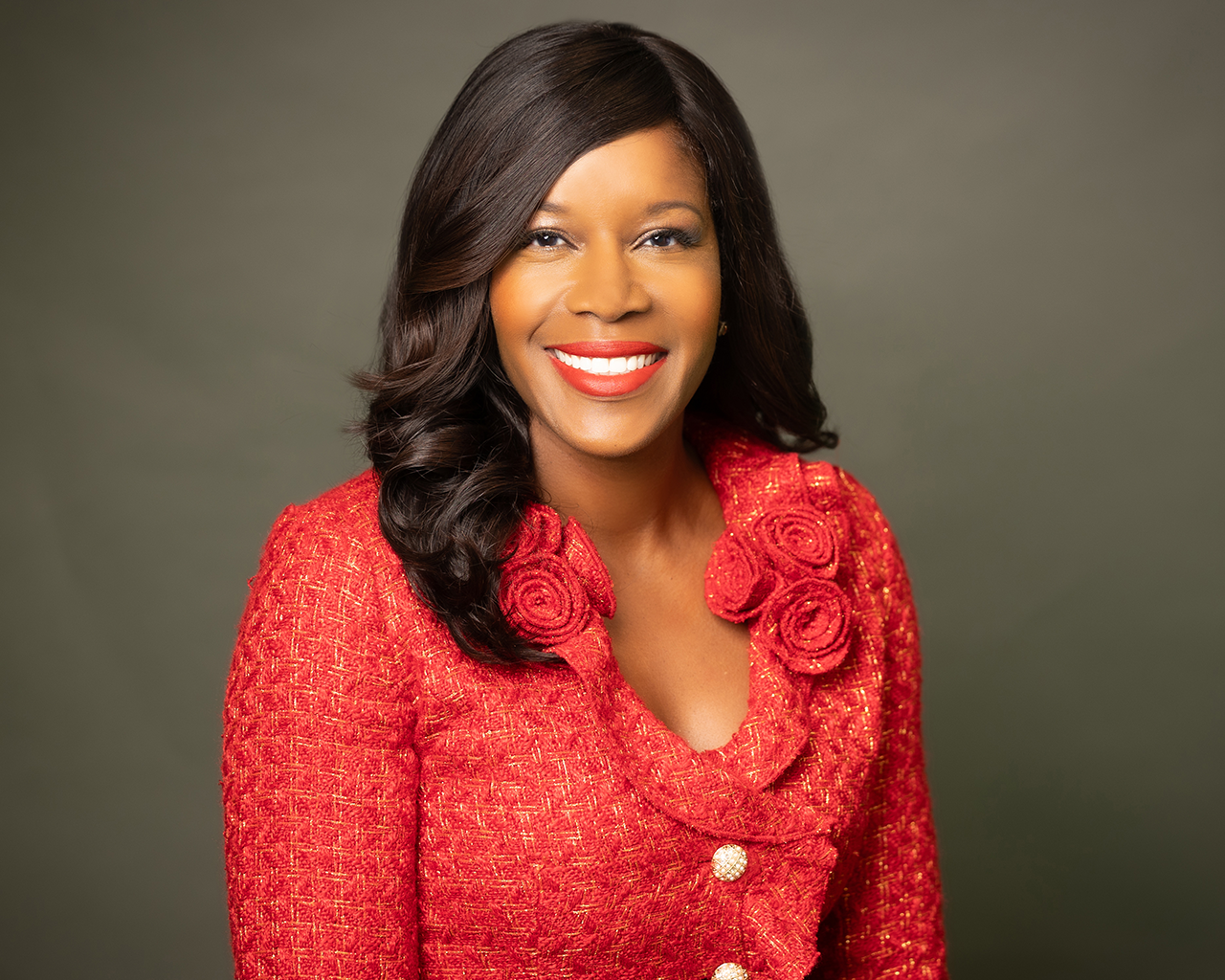
Bar President Rosalyn “Sia” Baker-Barnes on Career Balance, Advocacy, and Impact
FSU Law alumna and The Florida Bar President Rosalyn ‘Sia’ Baker-Barnes (‘00) is making history—and redefining what leadership in the legal profession can look like.
By: Suzi Baugh
A shareholder at Searcy Denney Scarola Barnhart & Shipley, P.A. in West Palm Beach, a board-certified civil trial lawyer, and one of the most respected advocates in the country, Baker-Barnes has built a career marked by both excellence and impact.
Her accolades are extensive, including recognition as one of the “Best Lawyers in America” and one of Lawdragon’s “500 Leading Plaintiff Consumer Lawyers,” along with honors from Florida Super Lawyers, Florida Trend, and the Daily Business Review, to name a few. This year, she reached another historic milestone as the first Black woman to lead The Florida Bar. She is also, as she is quick to note, a wife and mother of three wonderful children.
“To me, it’s more about a work-life blend,” said Baker-Barnes. “It means engaging in the things you value in a meaningful way. It doesn’t mean you’re everywhere all the time—because the reality is, as working moms, we’re going to miss some things. I try really hard not to miss the important ones, and when I can’t be there, I rely on my support team.”
For women in law, those realities are layered on top of longstanding structural barriers. Unwritten rules still shape who leads trials, who clients assume is “in charge,” and who is included in informal networks that remain largely male. National data shows that while women now comprise roughly 56 percent of law students and about 41 percent of practicing lawyers, they hold fewer than a quarter of equity partner roles and only a small fraction of managing partner positions.
“The path in law is different for women,” Baker-Barnes said. “That is just the reality.”
Years in the courtroom have shaped that understanding. As a trial lawyer, Baker-Barnes represents clients whose lives have been permanently altered. As Bar president, her focus has expanded beyond individual cases to the profession itself. She is using her platform to address why so many lawyers—particularly women—are struggling to sustain long-term careers in law.
“When I thought about what I hoped to accomplish this year, I went back to something a mentor of mine said and lived by,” she explained. “‘If you want to effectuate real change, you must have a seat at the table.’ You must earn that seat, and then you have to make room for others.”
That philosophy has guided several major initiatives launched during her presidency. One is the Corporate Counsel Committee, a new standing committee of The Florida Bar that brings together in-house counsel from across the state through monthly CLEs and collaborative programming, reflecting Florida’s rapidly growing business landscape.
Another is the Sustainability Initiative for Attorneys, a special committee dedicated to understanding what lawyers need to build meaningful, fulfilling, and sustainable careers.
“I’ve spoken with lawyers three to five years out, seven to ten years out, and even twenty years in,” Baker-Barnes said. “They’re saying, ‘I’m not sure I can continue to do this.’ Whether it’s workload, family responsibilities, lack of advancement, or simply burnout, we’re seeing good lawyers leave the profession altogether. We’re studying why that’s happening and just as importantly, why others stay.”
She is also working closely with The Florida Bar’s Young Lawyers Division, which focuses on helping new attorneys transition from law school to practice and continue developing professionally. One of its flagship initiatives this year, Open for Opportunity, combines mentorship, networking, and a resource-driven job fair.
“It gives young lawyers a chance to speak directly with mentors and leaders about different career paths, how to move into corporate counsel roles, shift practice areas, and build skills they’ll need for the future,” she said.
Much of Baker-Barnes’s approach to leadership can be traced back to her time at the Florida State University College of Law. She arrived on a full scholarship after earning her undergraduate degree in communications, initially drawn to television and public-facing work due to her strong speaking abilities. She put those skills to use early, working in the press office of Governor Lawton Chiles, but she knew she wanted more work rooted in service and advocacy.
At FSU Law, she began transforming her communication skills into courtroom expertise. As a 1L, she reached the Moot Court Final Four at the Florida Supreme Court. After her argument, a justice offered advice that would shape her career: she belonged in a trial courtroom.
“I walked out of that courtroom understanding who I was supposed to be,” she recalled.
That clarity—about her strengths, her purpose, and her role as an advocate—continues to shape how she thinks about preparing the next generation of lawyers. One of her priorities as Bar president is strengthening the bridge from law school to practice, particularly for attorneys who began their careers during the pandemic and missed out on in-person mentorship and courtroom exposure.
Her candor has made her a trusted mentor, especially for women trying to envision long-term careers in law. When younger lawyers feel overwhelmed by an upcoming trial or major argument, she returns to a simple framework: plan, prepare, and execute. The steps are straightforward, but the message is deeper: do the work, trust yourself, and stand on your preparation.
That mindset fuels her determination to widen the path for those who come after her, including current and future FSU Law graduates. She encourages students and young alumni to choose workplaces that recognize their value and to advocate for meaningful work, honest feedback, and opportunities for professional growth and advancement.
Her message is not one of resignation about the profession. It is a call to engage with it—to shape the law into something more sustainable, more humane, and more reflective of the people who enter it.
“Once you earn your seat, your job is to make sure you’re not the last one there,” Baker-Barnes said.