
Seventeenth Annual Constitutional Law Colloquium
Friday, November 6 & Saturday, November 7, 2026, Tallahassee, FL
Florida State University College of Law and Loyola University Chicago School of Law will co-host the Seventeenth Annual Constitutional Law Colloquium at Florida State University College of Law Campus, 425 W Jefferson Street, Tallahassee, FL 32306.
This event will provide a forum for constitutional law scholars at all stages of their professional careers to discuss current projects, doctrinal and theoretical developments in constitutional law, and future goals. The conference will bring together academics to discuss works-in-progress concerning a broad variety of constitutional issues—including Free Speech, Substantive Due Process, Equal Protection, Suffrage Rights, Campaign Finance, Interpretive Methods, Process Oriented Constitutionalism, Issues at the Interface of National Security and Constitutional Rights, Due Process Underpinnings of Criminal Procedure, Judicial Review, Executive Privilege, Suspect Classifications, Commerce Clause, and Comparative Constitutionalism—to present ideas and benefit from informed critiques. All submissions will be considered, but participation is by invitation only. Past participants have included constitutional law scholars from throughout the United States and several foreign countries. Presentations will be assigned to panels based on affinity of subject matter. The conference is also open to scholars who wish to attend sessions without presenting.
Abstract Submission Procedure
Abstracts should be submitted electronically here no later than June 19, 2026. Abstracts for co-authored papers should be submitted only once.
Participants must cover travel and lodging, but the host institutions will provide meals throughout the conference.
Keynote Speaker
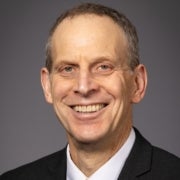
Michael C. Dorf
Robert S. Stevens Professor of Law, Cornell Law School
Michael C. Dorf has authored or co-authored well over one hundred scholarly articles and essays for law reviews, books, and peer-reviewed science and social science journals. He is the co-author (with Laurence H. Tribe) of On Reading the Constitution (Harvard University Press, 1991), the co-author (with Trevor Morrison) of The Oxford Introductions to U.S. Law: Constitutional Law (Oxford University Press, 2010), the editor of Constitutional Law Stories (Foundation Press 2004, second edition 2009), the author of No Litmus Test: Law Versus Politics in the 21st Century (Rowman & Littlefield, 2006), the co-author (with Sherry F. Colb) of Beating Hearts: Abortion and Animal Rights (Columbia University Press, 2016), and a co-editor of the 12th, 13th, and 14th editions of the Choper et al Constitutional Law casebook (West, 2015, 2019, 2023), the annual Supplement thereto, and the annual compact version of the casebook, Leading Cases. Professor Dorf was a member of an inter-disciplinary team at Cornell that conducted federal grant-funded research on the relative efficacy of various formats of cigarette and e-cigarette warnings. That research led to the publication of twelve scientific papers on which he is a co-author. A graduate of Harvard College and Harvard Law School, Professor Dorf spent the year between college and law school as a Rotary Scholar in the physics department at Victoria University of Wellington, New Zealand. After law school, he served as a law clerk for Judge Stephen Reinhardt of the United States Court of Appeals for the Ninth Circuit and then for Justice Anthony M. Kennedy of the Supreme Court of the United States. Before joining the Cornell faculty in 2008, Professor Dorf taught at Rutgers-Camden Law School for three years and at Columbia Law School for thirteen years. At Columbia, he served as Vice Dean for four years and was the Isidor & Seville Sulzbacher Professor of Law. Professor Dorf maintains an active pro bono practice that chiefly consists of writing amicus briefs in Supreme Court cases. He teaches constitutional law, federal courts, and various seminars, and is a recipient of the 2026 Provost Award for Teaching Excellence in Graduate and Professional Degree Programs.
Conference Organizers
Professor Barry Sullivan, Loyola University Chicago School of Law, Raymond and Mary Simon Chair in Constitutional Law and George Anastaplo Professor of Constitutional Law and History.
Professor Alexander Tsesis, Professor and D’Alemberte Chair in Constitutional Law, Florida State University College of Law.
Program Administrators: Audrey Michaelson and Caroline Giddens, ConstitutionLaw@luc.edu.
Previous Events
Friday, November 7 & Saturday, November 8, 2025
Loyola University Chicago School of Law and Florida State University College of Law will co-host the Sixteenth Annual Constitutional Law Colloquium at Loyola University Chicago School of Law.
This event will provide a forum for constitutional law scholars at all stages of their professional careers to discuss current projects, doctrinal and theoretical developments in constitutional law, and future goals. The conference will bring together academics to discuss works-in-progress concerning a broad variety of constitutional issues—including Free Speech, Substantive Due Process, Equal Protection, Suffrage Rights, Campaign Finance, Interpretive Methods, Process Oriented Constitutionalism, Issues at the Interface of National Security and Constitutional Rights, Due Process Underpinnings of Criminal Procedure, Judicial Review, Executive Privilege, Suspect Classifications, Commerce Clause, and Comparative Constitutionalism—to present ideas and benefit from informed critiques. All submissions will be considered, but participation is by invitation only. Past participants have included constitutional law scholars from throughout the United States and several foreign countries. Presentations will be assigned to panels based on affinity of subject matter. The conference is also open to scholars who wish to attend sessions without presenting.
Keynote Speaker
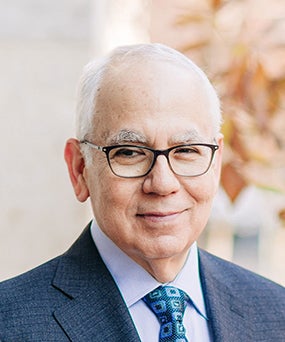
Professor Peter M. Shane
Professor Emeritus at Ohio State University Moritz College of Law and Adjunct Professor and Distinguished Scholar at New York University School of Law
Professor Peter M. Shane is a leading scholar in U.S. constitutional and administrative law, with a special focus on the American presidency and the separation of powers. The University of California Press in May 2022 published Professor Shane’s newest book, Democracy’s Chief Executive: Interpreting the Constitution and Defining the Future of the Presidency. He is the Distinguished Scholar in Residence and Adjunct Professor of Law at the NYU College of Law and the Jacob E. Davis and Jacob E. Davis II Chair in Law Emeritus at the Ohio State University’s Moritz College of Law, where he regularly taught courses in constitutional and administrative law, law and the presidency, and subjects at the intersection of law, democracy, and new media. A Contributing Writer to Washington Monthly, Professor Shane is also the author of over seventy law review articles and book chapters, as well as nine books, including leading casebooks in both administrative law and separation of powers law.
Friday, November 15 & Saturday, November 16, 2024
Florida State University College of Law and Loyola University Chicago School of Law will co-host the Fifteenth Annual Constitutional Law Colloquium at the FSU College of Law campus, 425 West Jefferson Street, Tallahassee, FL 32306.
This event will provide a forum for constitutional law scholars at all stages of their professional careers to discuss current projects, doctrinal and theoretical developments in constitutional law, and future goals. The conference will bring together academics to discuss works-in-progress concerning a broad variety of constitutional issues—including free speech, substantive due process, equal protection, suffrage rights, campaign finance, interpretive methods, process oriented constitutionalism, issues at the interface of national security and constitutional rights, due process underpinnings of criminal procedure, judicial review, executive privilege, suspect classifications, commerce clause, and comparative constitutionalism—to present ideas and benefit from informed critiques. All submissions will be considered, but participation is by invitation only. Past participants have included constitutional law scholars from throughout the United States and several foreign countries. Presentations will be assigned to panels based on affinity of subject matter. The conference is also open to scholars who wish to attend sessions without presenting.
Keynote Speaker

Cristina Rodríguez
Leighton Homer Surbeck Professor of Constitutional Law, Yale Law School
Cristina M. Rodríguez is the Leighton Homer Surbeck professor of law at Yale Law School. Her fields of research and teaching include constitutional law and theory, immigration law and policy, administrative law and process, and citizenship theory. In 2021, she was appointed by President Biden to co-chair the commission on the Supreme Court of the United States. Her recent writings include the 2020 foreword to the Harvard Law Review, “Regime Change,” and the book, "The President and Immigration Law", co-authored with Adam Cox and published by Oxford University Press in September 2020. In recent years, her work has focused on the relationships between administrative and executive governance, democratic politics, and decision making. She has turned to immigration law and related areas as vehicles through which to explore how the allocation and exercise of power (through federalism, the separation of powers, and the structure of the bureaucracy) shapes the management and resolution of legal and political conflict. Her work also has examined the effects of immigration on society and culture, as well as the legal and political strategies societies adopt to absorb immigrant populations. Rodríguez joined Yale Law School in 2013 after serving for two years as deputy assistant attorney general in the Office of Legal Counsel at the U.S. Department of Justice. She was on the faculty at the New York University School of Law from 2004–2012 and has been a visiting professor of law at Stanford, Harvard, and Columbia Law Schools. She is a member of the American Academy of Arts and Sciences and the American Law Institute, a trustee and non-resident fellow of the Migration Policy Institute in Washington, D.C., and a past member of the Council on Foreign Relations. She earned her B.A. and J.D. degrees from Yale and attended Oxford University as a Rhodes Scholar, where she received a Master of Letters in modern history. Following law school, Rodríguez clerked for Judge David S. Tatel of the U.S. Court of Appeals for the D.C. Circuit and Justice Sandra Day O’Connor of the U.S. Supreme Court.