
Seventeenth Annual Constitutional Law Colloquium
Friday, November 6 & Saturday, November 7, 2026, Tallahassee, FL
Florida State University College of Law and Loyola University Chicago School of Law will co-host the Seventeenth Annual Constitutional Law Colloquium at Florida State University College of Law Campus, 425 W Jefferson Street, Tallahassee, FL 32306.
This event will provide a forum for constitutional law scholars at all stages of their professional careers to discuss current projects, doctrinal and theoretical developments in constitutional law, and future goals. The conference will bring together academics to discuss works-in-progress concerning a broad variety of constitutional issues—including Free Speech, Substantive Due Process, Equal Protection, Suffrage Rights, Campaign Finance, Interpretive Methods, Process Oriented Constitutionalism, Issues at the Interface of National Security and Constitutional Rights, Due Process Underpinnings of Criminal Procedure, Judicial Review, Executive Privilege, Suspect Classifications, Commerce Clause, and Comparative Constitutionalism—to present ideas and benefit from informed critiques. All submissions will be considered, but participation is by invitation only. Past participants have included constitutional law scholars from throughout the United States and several foreign countries. Presentations will be assigned to panels based on affinity of subject matter. The conference is also open to scholars who wish to attend sessions without presenting.
Presenters & Abstracts
Participants must cover travel and lodging, but the host institutions will provide meals throughout the conference.
Contact the Constitutional Law Colloquium coordinators for the password
| Author | Abstract Title |
|---|---|
| Arvind Kurian Abraham | Everson and the Politics of the Vinson Court |
| William Araiza | Constructing Equal Protection |
| Nadia Banteka & Itay Ravid | On Our Behalf? Exploring Public Perception of Police Actions and the “State Action” Doctrine |
| Jorge Barrera-Rojas | Comparative Law by Exclusion |
| Beau Baumann | Cook v. Trump and the Spectacle of the Redeemer Purge |
| Elizabeth Beavers | The Toothless National Security Resolution Revolution |
| Zamir Ben-Dan | Originalism as an Incident of Slavery |
| Eric Berger | Gregg’s Faulty Assumptions and the Politics of Retribution |
| Emily Berman | A More Determinate State Standing Doctrine |
| Marc Blitz | What Dreams May Harm: Safeguarding (and Limiting) Freedom of Imagination in an Age of Neurotechnology |
| Anja Bossow | A Qualified Defense of Immigration Exceptionalism |
| Jason Buhi | Everything But Title: The 2026 Arctic Defense Agreement and Security Co-Sovereignty in Greenland |
| Ben Cavataro | Executive Self-Glorification |
| Jake Charles | A Youngstown Framework for History and Tradition |
| Noah Chauvin | Intelligence Oversight under a Unitary Executive |
| Grant Christensen | Incorporating Indian Tribes into the Federal Rules |
| Laura Cisneros | Democratic Temporality: Duration, Simultaneity, and the Constitutional Time Regime of the Roberts Court |
| Franciska Coleman | Why Aren’t Scholars Braver |
| Caroline Mala Corbin | Law Office Science |
| Zachary Cormier | Artificial Disruptions |
| Elodie Currier Stoffel | Confronting AI Evidence |
| Perry Dane | The Structures of Separation of Powers: Of Clocks and Antinomies |
| Gianmario Demuro | Political constitutionalism, illiberal democracy and the rule of law |
| Thomas Donnelly | Incorporation’s Unfinished Revolution: The Seventh Amendment, Reconstruction, and the Forgotten Story of Walker v. Sauvinet |
| Jerry Edwards | The Reconstructed First Amendment |
| Jacob Eisler & Yunsieg Kim | The Artificial Intelligence Ratchet in Public Law |
| Dan Epstein | Against Congressional Oversight |
| Yuval Erez | Elections in War and the War on Elections |
| Julia Ernst | Thomas Jefferson’s Kaleidoscopic Construction of the U.S. Constitution |
| Jorge Fabra-Zamora | THE PERFORMATIVE CONTRADICTIONS OF ORIGINALIST JUDICIAL DISCOURSE |
| Tolulope Falokun | Constitutional Limits on AI Liability: Allocating Responsibility for AI-Generated Harm |
| Charquia Fegins | Unitary Executive Theory Stories |
| Stuart Ford | Rehabilitating the Preamble |
| David Froomkin | Presidency Exceptionalism |
| Lauren Gailey | Market Failure: Has Social Media Destroyed the Marketplace of Ideas? |
| Amy Gaudion | Unleashing the Watchdogs |
| Akriti Gaur | Covert Connection: The nexus between the state and technology platforms in an era of democratic backsliding |
| Erica Goldberg | ARTIFICIAL INTELLIGENCE, FREE SPEECH, AND SPEECH HARMS |
| Paul Gowder | Disobey Trump v. United States |
| Stephen Griffin | Low Trust Constitutionalism |
| David Han | Generative AI and the Evolution of First Amendment Jurisprudence |
| Denise Harle & Ryan Owens | License to Compel Speech |
| Stacy Hawkins | Academic Freedom for All |
| Wes Henricksen | Sullivan's Egalitarian Betrayal |
| Richard Jolly | Jury Maximalism |
| Mugambi Jouet | The Sphere of Criminality: A Window Into History, Democracy, and Authoritarianism |
| Rob Kahn | Patriotism, Linguistic Discrimination and the Promise of Meyer v. Nebraska |
| Rodrigo Kanayama & Fabricio Tomio | State Courts in Federal Systems: Design, Costs, and Efficiency in Brazil and the United States |
| Daniel Kiel | Redefining Brown |
| Yunsieg Kim | The Victory Trap |
| Rachel Kincaid | The Supreme Court's Fantastical Creature of Criminal Law |
| Andrew Konstant | Accountability without Capacity: Oversight, Expertise, and the Robert's Court's Administrative Law |
| Kathryn Kovacs | Reforming Regulatory Review |
| Bakshi Kushagr | Towards a Theory of Transformative Federalism |
| Corinna Lain | The Modern Death Penalty Era: You Can't Tame a Tiger |
| David Landau | Judging Emergencies |
| Brittney Lane Kubisch | Rediscovering the Procedural Constitution |
| Dan Lewerenz | Assessing the Impact of the Tribal Supreme Court Project |
| Artur Pericles Lima Monteiro | Platform Unbundling and the First Amendment |
| Brian Lipshutz | Contemporaneous and Consistent Interpretations |
| Victoria Litman | The Varieties of Post-Supremacy Federalism |
| Adam Littlestone-Luria | Article III and Civilian States Traditions |
| Danielle Lyn | Global Sport and the Foreign Commerce Power |
| Jonathan Marshfield | Originalism and State Constitutions |
| John Martin | Fractional Districting |
| Cynthia Merrill | History, Narration and Judicial Authority: The Supreme Court’s Adjudication of the Rights of the Marginalized |
| Abigail Moncrieff | A Quantum Theory of Legal Indeterminacy |
| Christina Mulligan | The Police Power and the General Law |
| Kerrel Murray | Reconstructing the Public Party |
| Alan Mygatt-Tauber | Unreasoned Decisions |
| Helen Norton | Nonhuman Speakers and the Constitution |
| Erika Nyborg-Burch & Nadia Banteka | Police-Created Suspicion |
| Reginald Oh | Original Spiritual Meaning, Shared Reality, and A More Perfect Union |
| David Orentlicher | Making America a Democracy Again: How to Fix Our Political Dysfunction |
| Laura Portuondo | Anti-Equality Equality Claims |
| Francesca Procaccini | Living Rights |
| Zoe Robinson & Leah Fowler | Trad |
| Graziella Romeo | Different Democracies? The Paradox of Voter Access in the United States and Europe |
| Jennifer Safstrom | From Pickering to the Present: Analyzing the Evolution and Future of the Government Employee Speech Doctrine |
| Audra Savage | Constituting Race, Erasing Religion: Black Religious Freedom and the Limits of the First Amendment |
| David Schraub | Discriminatory Government Speech |
| Eric Segall | It is Well Past time to Abandon the Foolish and Fraudulent Fixation Thesis |
| Joshua Segev | The Ten Commandments’ New Constitutional Clothes |
| David Simson | When things get complicated on close inspection: The slipperiness of ‘race’ in suspect class and race discrimination doctrines |
| Nidhi Singh | Algorithmic Adjudication and the Constitution: Mapping Accountability for AI in Courts Across the United States and India |
| G. Alex Sinha | Reclaiming Rights from a Free-Speech Wasteland |
| Michael Smith | "Common Sense" and the Roberts Court |
| Noah Smith-Drelich | Legal Actors in Constitutional Litigation |
| Maru Smith-Opabola | A Countermajoritarian Press Clause |
| Itai Sneh | Presidential Powers Expanded Beyond Originalism: Is it FDR Time Or a Scalia Moment? |
| Jack Thorlin | The Originalist Case Against Ten Commandments Displays in Public Schools |
| Joe Tomain | Commercial Speech in a Brave New World |
| Tuğba Tosun Çobanoğlu | Cognitive Capture and the Limits of Due Process in Algorithmic Decision-Making |
| Ioanna Tourkochoriti | Comparing Declarations: The American Declaration of Independence and The French Declaration of the Rights of Man and the Citizen |
| Takis Tridimas | The value of constitutional values: lessons for Europe |
| Jared Trujillo | Canaries in the Coal Mine: Online Sex Work, Revenge Porn, and the State Constitutional Right to Privacy |
| Alexander Tsesis | The Declaration of Independence in the Age of Generative AI |
| PM Vasudev & Jan Weir | Financial System as a Constitutional/Democratic Responsibility |
| Magdalini-Christina Vlachou-Vlachopoulou | Who Does the Major Questions Doctrine Really Constrain? Learning Resources, Inc. et al. v. Trump Between Appearance and Reality |
| Anoo Vyas | A Modest Conflagration: Constitutional Liquidation of the Apportionment Clause |
| Rivka Weill | Restraint and Rescue: When Courts Defend Legislatures from the Executive |
| Michael Wetmore | Beyond Batson: Stereotyping, Implicit Bias, and the Reality of Jury Selection Forty Years Later |
| Lucy Williams | Apophatic Interpretation, Birthright Citizenship, and the Anti-Aristocratic Constitution |
| Andrew Willinger | Ancient Legislative History |
| Danaya Wright | Tyler and Pung: A New Day for Takings and Excessive Fines in Property Tax Foreclosures or the Same Old Exploitation |
| Evan Zoldan | A Special Case: How Targeted Legislation Shaped American Law |
| Stephanie Barclay | Author Meets Reader |
| Jack Balkin | Commentary on Stephanie Barclay's book |
| Jacob Eisler | Commentary on Stephanie Barclay's book |
| Francisco Urbina | Commentary on Stephanie Barclay's book |
Keynote Speaker
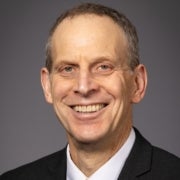
Michael C. Dorf
"Realism, Formalism, Courage, and Hyperopia: Reflections on the Roberts Court’s Response to Authoritarianism"
Robert S. Stevens Professor of Law, Cornell Law School
Michael C. Dorf has authored or co-authored well over one hundred scholarly articles and essays for law reviews, books, and peer-reviewed science and social science journals. He is the co-author (with Laurence H. Tribe) of On Reading the Constitution (Harvard University Press, 1991), the co-author (with Trevor Morrison) of The Oxford Introductions to U.S. Law: Constitutional Law (Oxford University Press, 2010), the editor of Constitutional Law Stories (Foundation Press 2004, second edition 2009), the author of No Litmus Test: Law Versus Politics in the 21st Century (Rowman & Littlefield, 2006), the co-author (with Sherry F. Colb) of Beating Hearts: Abortion and Animal Rights (Columbia University Press, 2016), and a co-editor of the 12th, 13th, and 14th editions of the Choper et al Constitutional Law casebook (West, 2015, 2019, 2023), the annual Supplement thereto, and the annual compact version of the casebook, Leading Cases. Professor Dorf was a member of an inter-disciplinary team at Cornell that conducted federal grant-funded research on the relative efficacy of various formats of cigarette and e-cigarette warnings. That research led to the publication of twelve scientific papers on which he is a co-author. A graduate of Harvard College and Harvard Law School, Professor Dorf spent the year between college and law school as a Rotary Scholar in the physics department at Victoria University of Wellington, New Zealand. After law school, he served as a law clerk for Judge Stephen Reinhardt of the United States Court of Appeals for the Ninth Circuit and then for Justice Anthony M. Kennedy of the Supreme Court of the United States. Before joining the Cornell faculty in 2008, Professor Dorf taught at Rutgers-Camden Law School for three years and at Columbia Law School for thirteen years. At Columbia, he served as Vice Dean for four years and was the Isidor & Seville Sulzbacher Professor of Law. Professor Dorf maintains an active pro bono practice that chiefly consists of writing amicus briefs in Supreme Court cases. He teaches constitutional law, federal courts, and various seminars, and is a recipient of the 2026 Provost Award for Teaching Excellence in Graduate and Professional Degree Programs.
Conference Organizers
Professor Barry Sullivan, Loyola University Chicago School of Law, Raymond and Mary Simon Chair in Constitutional Law and George Anastaplo Professor of Constitutional Law and History.
Professor Alexander Tsesis, Professor and D’Alemberte Chair in Constitutional Law, Florida State University College of Law.
Program Administrators: Audrey Michaelson and Caroline Giddens, ConstitutionLaw@luc.edu.
Previous Events
Friday, November 7 & Saturday, November 8, 2025
Loyola University Chicago School of Law and Florida State University College of Law will co-host the Sixteenth Annual Constitutional Law Colloquium at Loyola University Chicago School of Law.
This event will provide a forum for constitutional law scholars at all stages of their professional careers to discuss current projects, doctrinal and theoretical developments in constitutional law, and future goals. The conference will bring together academics to discuss works-in-progress concerning a broad variety of constitutional issues—including Free Speech, Substantive Due Process, Equal Protection, Suffrage Rights, Campaign Finance, Interpretive Methods, Process Oriented Constitutionalism, Issues at the Interface of National Security and Constitutional Rights, Due Process Underpinnings of Criminal Procedure, Judicial Review, Executive Privilege, Suspect Classifications, Commerce Clause, and Comparative Constitutionalism—to present ideas and benefit from informed critiques. All submissions will be considered, but participation is by invitation only. Past participants have included constitutional law scholars from throughout the United States and several foreign countries. Presentations will be assigned to panels based on affinity of subject matter. The conference is also open to scholars who wish to attend sessions without presenting.
Keynote Speaker
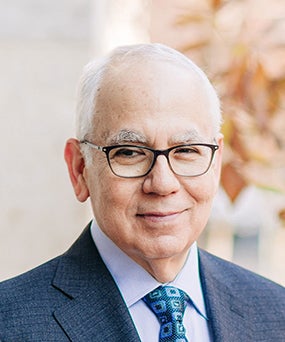
Professor Peter M. Shane
Professor Emeritus at Ohio State University Moritz College of Law and Adjunct Professor and Distinguished Scholar at New York University School of Law
Professor Peter M. Shane is a leading scholar in U.S. constitutional and administrative law, with a special focus on the American presidency and the separation of powers. The University of California Press in May 2022 published Professor Shane’s newest book, Democracy’s Chief Executive: Interpreting the Constitution and Defining the Future of the Presidency. He is the Distinguished Scholar in Residence and Adjunct Professor of Law at the NYU College of Law and the Jacob E. Davis and Jacob E. Davis II Chair in Law Emeritus at the Ohio State University’s Moritz College of Law, where he regularly taught courses in constitutional and administrative law, law and the presidency, and subjects at the intersection of law, democracy, and new media. A Contributing Writer to Washington Monthly, Professor Shane is also the author of over seventy law review articles and book chapters, as well as nine books, including leading casebooks in both administrative law and separation of powers law.
Friday, November 15 & Saturday, November 16, 2024
Florida State University College of Law and Loyola University Chicago School of Law will co-host the Fifteenth Annual Constitutional Law Colloquium at the FSU College of Law campus, 425 West Jefferson Street, Tallahassee, FL 32306.
This event will provide a forum for constitutional law scholars at all stages of their professional careers to discuss current projects, doctrinal and theoretical developments in constitutional law, and future goals. The conference will bring together academics to discuss works-in-progress concerning a broad variety of constitutional issues—including free speech, substantive due process, equal protection, suffrage rights, campaign finance, interpretive methods, process oriented constitutionalism, issues at the interface of national security and constitutional rights, due process underpinnings of criminal procedure, judicial review, executive privilege, suspect classifications, commerce clause, and comparative constitutionalism—to present ideas and benefit from informed critiques. All submissions will be considered, but participation is by invitation only. Past participants have included constitutional law scholars from throughout the United States and several foreign countries. Presentations will be assigned to panels based on affinity of subject matter. The conference is also open to scholars who wish to attend sessions without presenting.
Keynote Speaker

Cristina Rodríguez
Leighton Homer Surbeck Professor of Constitutional Law, Yale Law School
Cristina M. Rodríguez is the Leighton Homer Surbeck professor of law at Yale Law School. Her fields of research and teaching include constitutional law and theory, immigration law and policy, administrative law and process, and citizenship theory. In 2021, she was appointed by President Biden to co-chair the commission on the Supreme Court of the United States. Her recent writings include the 2020 foreword to the Harvard Law Review, “Regime Change,” and the book, "The President and Immigration Law", co-authored with Adam Cox and published by Oxford University Press in September 2020. In recent years, her work has focused on the relationships between administrative and executive governance, democratic politics, and decision making. She has turned to immigration law and related areas as vehicles through which to explore how the allocation and exercise of power (through federalism, the separation of powers, and the structure of the bureaucracy) shapes the management and resolution of legal and political conflict. Her work also has examined the effects of immigration on society and culture, as well as the legal and political strategies societies adopt to absorb immigrant populations. Rodríguez joined Yale Law School in 2013 after serving for two years as deputy assistant attorney general in the Office of Legal Counsel at the U.S. Department of Justice. She was on the faculty at the New York University School of Law from 2004–2012 and has been a visiting professor of law at Stanford, Harvard, and Columbia Law Schools. She is a member of the American Academy of Arts and Sciences and the American Law Institute, a trustee and non-resident fellow of the Migration Policy Institute in Washington, D.C., and a past member of the Council on Foreign Relations. She earned her B.A. and J.D. degrees from Yale and attended Oxford University as a Rhodes Scholar, where she received a Master of Letters in modern history. Following law school, Rodríguez clerked for Judge David S. Tatel of the U.S. Court of Appeals for the D.C. Circuit and Justice Sandra Day O’Connor of the U.S. Supreme Court.